
You didn’t get into real estate to manage your own anxiety.
You got into it to build wealth.
Somewhere along the way, those two quietly swapped places.
At first, those looked like completely different problems to me.
Others don't stop moving at all.
They just stop growing. They stay inside a range of deals that feels manageable. Not because that's where their ability ends, but because that's where the pressure feels survivable.
Others freeze. And stay stuck
They know exactly what needs to happen next, yet the capital raise waits, the hire that would free them stays pending, or the opportunity goes to someone less prepared who simply moved first.
Some operators push through.
The deals get done, but they're tired in a way sleep doesn't fix, the people at home get whatever's left, and every win is immediately replaced by the pressure of protecting it.
From the outside, nothing looks wrong.
You're still raising capital, talking to lenders, underwriting deals, answering investor questions. The portfolio keeps moving. So do you. What people don't see is what carrying that kind of exposure costs.
Over time, I started seeing the same pattern.
All three are handling the same thing: a mind that's become too loud to trust.
One outruns the noise.
One keeps stirring it, so it never settles.
One shrinks the portfolio until the noise feels survivable.
And all three make the same mistake. They treat the noise as information about the deal. The pressure feels like it's coming from the exposure, the market, the maturity date. So whatever the pressure says about the deal feels true.
You don't have to take my word for any of this. Run this test against your own portfolio. The deal that penciled on Tuesday looked like a mistake by Thursday, and nothing in the model changed. That flip was never information about the deal. It was information about the mind reading it.
When you look at a deal through a churned-up mind, you're not reading the deal. You're reading the churn. And a churned read can't be trusted in either direction. The confident yes comes back for review at night. The prudent no quietly reopens a week later.
You can’t out-spreadsheet this one
If a churned read can't be trusted in either direction, then more information was never going to fix it. You've run that experiment already. The books, the podcasts, the mastermind where everyone knows exactly what they'd do with your deal. By now you're exceptionally well-informed about a problem you still have.
What's missing is a skill nobody teaches in this industry: telling a clear read from a churned one while it's happening.
You can tell a clear read by what it does. The decision gets made. It stays made. And the last bad deal doesn't get a vote in it.
Which direction it points is not the measure. A clear read will tell you to pass on a deal everyone else is chasing. It will tell you to move on one that scares you. And sometimes it tells you to stay exactly in the range you're already in. Half of LinkedIn will tell you a tight buy box is discipline, and sometimes it is. The question is whether yours is discipline, or fear that's been calling itself discipline. From the outside, nobody can tell the difference. From the inside, you can.
This was never about taking more risk. It's about calculated risk where you can finally trust the calculation.
How does a mind that’s been churning for years get quiet?
The answer is less complicated than this industry wants it to be. A churned mind doesn't need to be fixed. It needs to be left alone. The noise settles on its own, every time, the moment you stop stirring it.
You already know this, even if you've never named it. Where do your good ideas actually show up? In the shower. On the drive home. Halfway through a workout. Almost never at the desk. The problem cracks precisely when you're not working it.
You've seen it. What you've never done is set aside time for it on purpose. At your level, slowing down looks like the one thing you can't afford: there's always another call, and the model is always open. So the settling only ever gets those stray gaps. Twenty minutes at a time, against a churn that's been building for months.
Which led me to a conclusion that sounds almost too simple. Operators don't need another six-month program to find out what a quiet mind does to a decision. They need one day with nothing else in it. Long enough for the noise to settle. Long enough to watch what happens when it does. Long enough to learn the difference between what's coming from the portfolio and what's coming from somewhere else.
That’s why I created the Dragon Day
One day, $1,000, and one decision. A real one.
The refinance you keep re-running.
The partner conversation you keep rescheduling.
The deal you can't get yourself to underwrite.
The dragon is my name for that gripping energy, and it isn't an enemy. It's the same force that was willing to carry all this in the first place. You don't get rid of it. You give it a place and a time to settle.
That's what the day is.

How the day runs
The gap in the middle is not a break. It's the mechanism. More than once, the thing an operator spent the whole first session circling had quietly sorted itself out by the time we sat back down.
By the end of the day you'll have watched it happen: same decision, same stakes, and the pressure in session two is a fraction of what it was in session one. Nothing outside changed. A feeling that rises and falls with your own thinking can't be coming from the deal. Once you've seen that on a decision of your own, you can catch it the next time a capital call, a lender 'no', or a three-in-the-morning certainty comes for you.
You sit back down with the same decision, the same numbers, and a settled mind. It reads differently. This is usually where the call gets made.
Lunch. A walk. Not the model. Not email. This is where you finally wait. The real kind, where you leave the noise alone and it does what it's been trying to do all along: settle.
We take the decision you brought and slow it down, until you can see what your mind is doing with it.
Session two, 90 minutes
Session one, 90 minutes, on Zoom
In between, at least 90 minutes, away.
The math: A Dragon Day is $1000
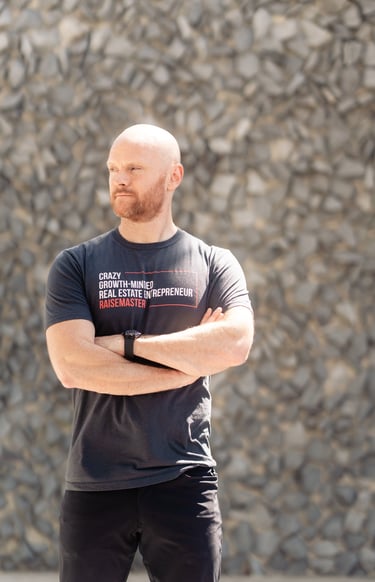
"I've spent far more than a hundred thousand dollars on coaching and consulting, and Risa is the best at getting you in the right mindset."
Now weigh $1,000 against the other number: what one frozen decision costs. The deal that sat in your pipeline while a competitor closed it. The refinance window you watched close. Nobody puts those on a P&L. You still pay them.
The price does one more thing. You find out exactly what my coaching is before committing to months of it. Most coaches ask you to trust them for a quarter. I'm asking for a day.
If the math already works for you:
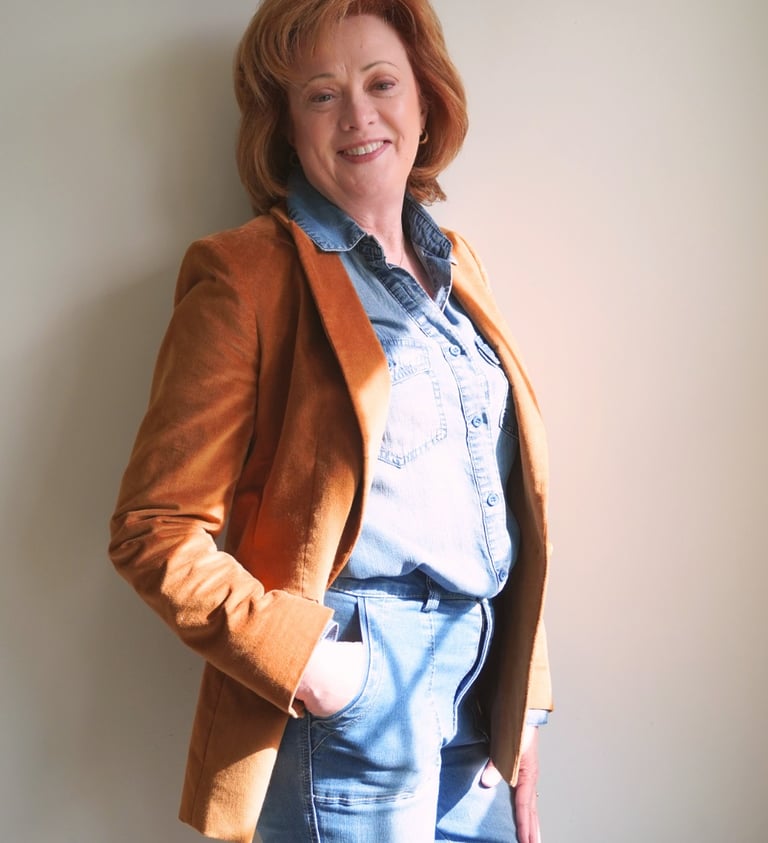
Here's Hunter Thompson. He's the managing principal of a PE firm that raised $85M, he coaches real estate operators himself, and he spent two years working with me:
The details
A Dragon Day happens over Zoom, on one day you set aside for it. I'm on the East Coast; we set the exact times on the discovery call, built around your time zone and your day.
Book at least 48 hours ahead. Partly planning, mostly design: the runway is where you choose what you're bringing, so the day starts quiet instead of scrambled. If your decision genuinely can't sit for 48 hours, say so on the discovery call.
I run at most three Dragon Days a month. Each one takes my full attention for a full day, and past three, the quality slips. So three is where it stays.
What this isn’t
And not soft.
The exposure is real. The personal guarantee is real. The lender's deadline is real. What your head does with them at night is the only part that can change. So that's the part we work on.
Not motivation
Nobody here tells you to back yourself or push harder. You've heard it. It's the least useful sentence on earth when you can't move.
Not therapy
We're not going into your childhood. We work on what's in front of you, in the language of your business.
Not deal advice
I'm not here to improve your underwriting. I'm here to improve the quality of the thinking behind it. You have people for the deal itself.
After the day
Some operators get what they came for in one day and I never see them again. That's a good outcome.
Others keep going. I coach a small number of operators privately, month to month. No contract. That's a decision for after the day, not during it.
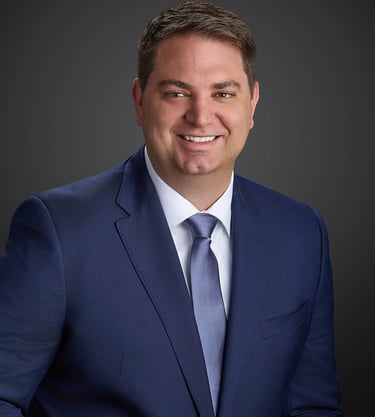
One more number. When Wayne recorded his testimonial, his firm carried $50M across development and operations. Today it manages over $100M. I'm not taking credit for the doubling. His deals did that. But he'll tell you the deals got easier to decide.
“Am I in WiFi Wayne mode, or am I not? When I'm not, that's really not the time to make these kinds of decisions.”
“I would never have even thought of that without these sessions.”
Wayne Courreges, managing principal of CREI Partners in Central Texas, stayed on for years. He built his own tool out of those sessions: before every hard call, he checks his internal signal the way you'd glance at your bars before a call you can't afford to drop.
In their own words
Hunter and Wayne both said yes when I asked them to talk about this work on camera. Watch before you book, if you want the fuller picture.


Operators with a decision in front of them right now. The day needs real stakes, because the noise we're working with only shows up under real pressure. Bring a hypothetical, and you'll get a pleasant, helpful day. Not the kind that changes how you decide.
It isn't for anyone who wants to be told what to do, or talked into working harder. I don't give orders, and I don't do pep talks. I'm not that coach.
Who books a Dragon Day?
A few questions you might already be asking.
On the call, you tell me the decision you'd bring. I tell you, honestly, whether one day will move it. If it won't, you'll hear that from me before you've spent a dollar.
The call runs both directions. You're deciding about me. I'm deciding whether a day with you will actually work. I only book Dragon Days I expect to land.